Baba Ganoush

Baba Ganoush

Middle Eastern eggplant cream with tahini and cumin.

50 minEasyDip-aufstrichVeganVegetarianGluten-FreeLactose-Free

Baba Ganoush is a classic of Arab cuisine — a silky eggplant cream, the kind served in Lebanon and Syria alongside flatbread, as a starter, or as a side dish. The eggplants are roasted in the oven until the flesh is soft and smoky, then blended with tahini, garlic, lemon juice, cumin and a dash of toasted sesame oil in the Vitamix into a fine cream. This version is vegan and comes together in the Vitamix in around 30 seconds with a particularly smooth result.

Instructions

  1. 1

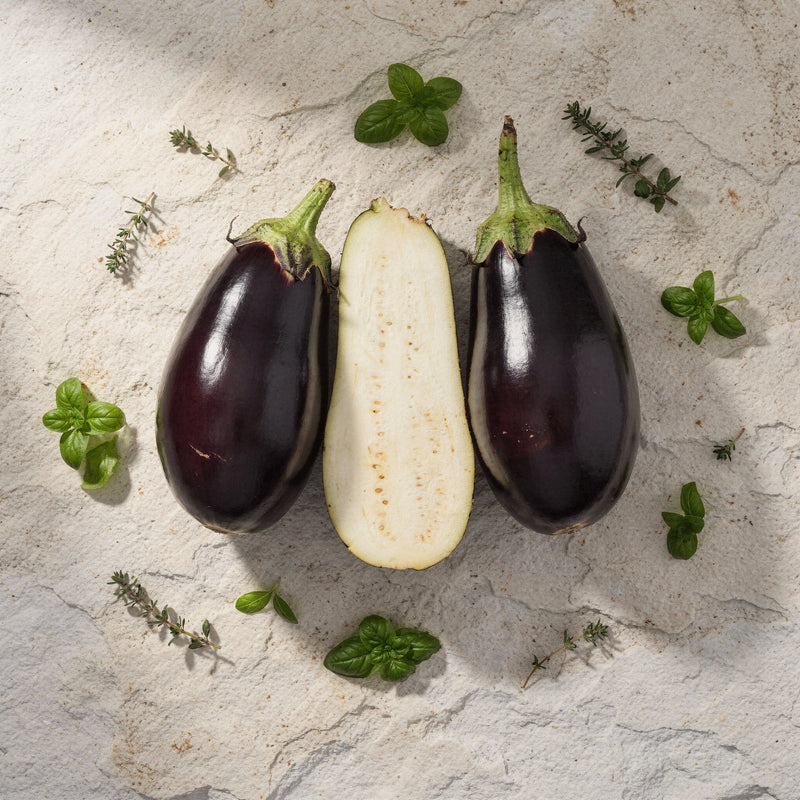
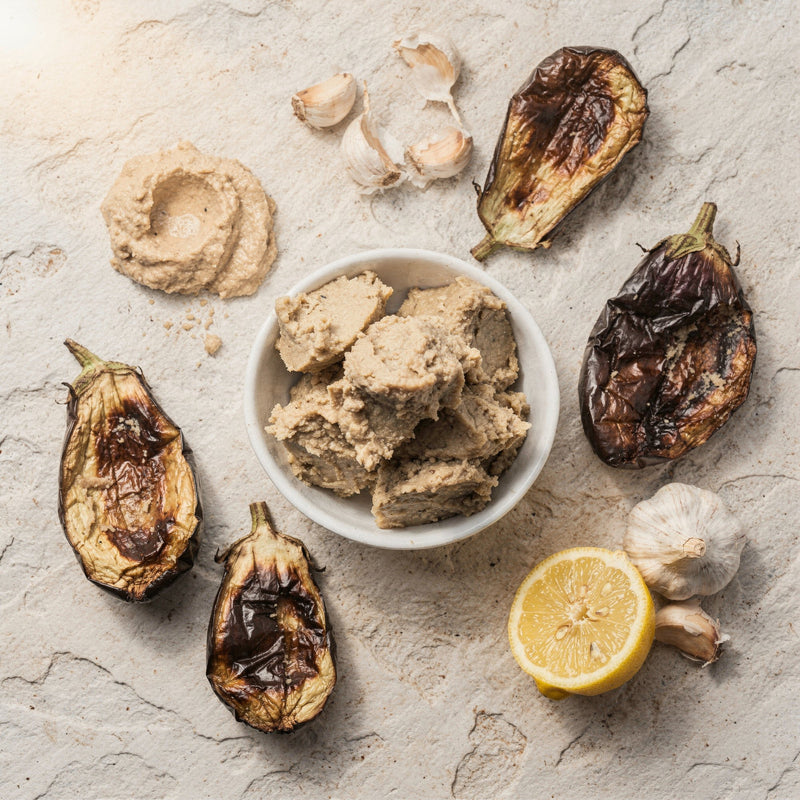
    Preheat the oven to 250 °C convection. Pierce the eggplants several times with a fork and place them on a baking sheet lined with parchment paper. Roast for 40 to 45 minutes until the skin blisters and blackens — turn once halfway through.
  2. 2

    Remove the baking sheet and let the eggplants rest for 10 minutes until cool enough to handle. Halve them lengthwise, scoop out the soft flesh with a spoon and add it directly to the Vitamix container. If a lot of liquid has released, let the flesh drain briefly in a sieve first.
  3. 3

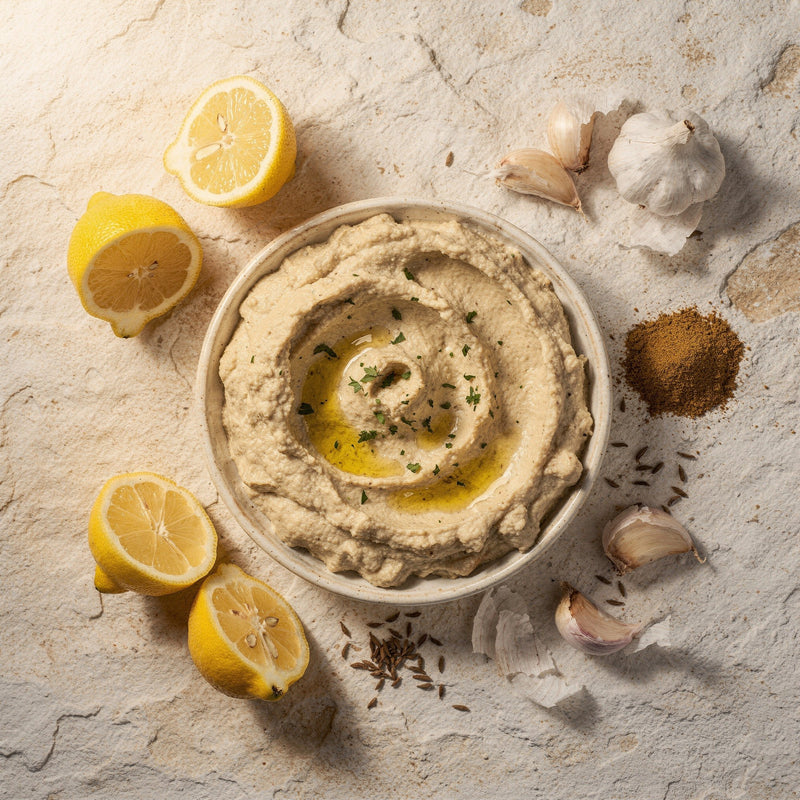
    Add garlic, lemon juice, tahini, cumin, salt, olive oil and sesame oil. Secure the lid, start the Vitamix and blend on the highest setting for 30 seconds until a smooth cream forms.
Serving & Toppings

  1. 1

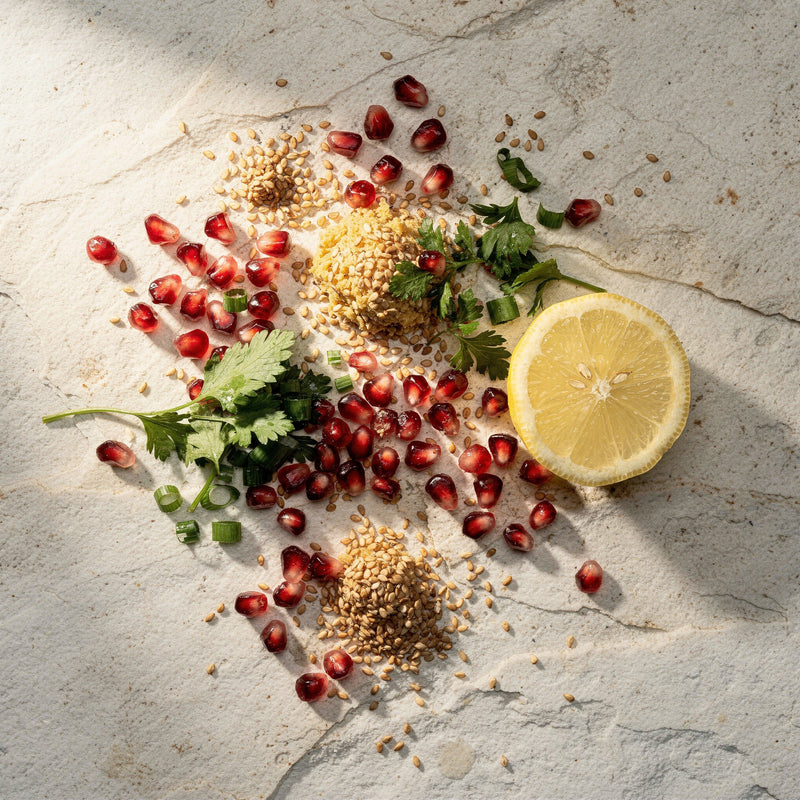
    Toast the sesame seeds dry in a pan over medium heat until golden brown — do not leave the pan, the seeds burn in seconds. Meanwhile, break open the pomegranate and remove the seeds, wash the parsley and pick off the leaves.
  2. 2

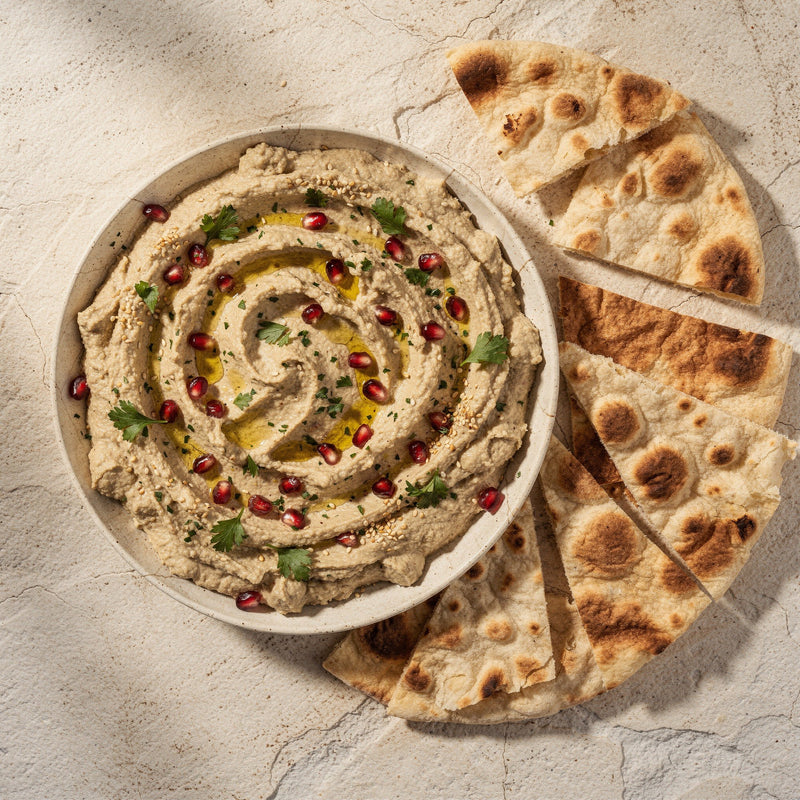
    Spread the cream on one or more plates, make a well in the center and cover the surface with pomegranate seeds, parsley leaves and sesame. Drizzle with a little olive oil and add chili flakes if desired.
Chef's Note

With the Vitamix, the cream comes together in under 30 seconds — from slightly chunky to a velvety eggplant mousse, fully controllable by blending time. Tip: let the eggplant flesh drain briefly after cooking so the cream does not turn watery. Topped with pomegranate seeds, parsley, and toasted sesame, Baba Ganoush becomes a visual highlight as well.

Baba Ganoush made from tender-cooked eggplant offers little resistance — the Vitamix works the flesh into a silky-smooth cream in about 30 seconds without any need to scrape down the sides. Insert the tamper whenever the mass stalls — this keeps everything moving to the blades. Anyone who prefers a more rustic texture can blend for less time or work by hand: both approaches are valid, and the blender is the option where texture has no limits.

Blending technique: the tamper is essential, as the eggplant mass is too dense for free rotation; Vitamix officially recommends 90 seconds on high speed for Baba Ganoush. Draining the flesh in a sieve before blending prevents a watery consistency.

Nutrition per 100 g

Energy 133 kcal555 kJ
Fat 11.1 g
of which saturated fat 2.0 g
Carbohydrates 7.4 g
of which sugars 3.4 g
Protein 2.5 g
Salt 1.1 g
Fiber 2.6 g

Values per EU FIC Regulation (1169/2011). Values are averages and may vary depending on ingredients and preparation.

Frequently Asked Questions

What does Baba Ganoush mean in English?
Baba Ganoush is Arabic and roughly translates as "spoiled daddy". It refers to a creamy aubergine paste from Middle Eastern cuisine, prepared with tahini (sesame paste), garlic and lemon.
What goes into a Baba Ganoush?
The base is oven-roasted aubergine, tahini, garlic, lemon juice, cumin, salt and olive oil. Roasted sesame oil adds an extra smoky note. Classic toppings are pomegranate seeds, parsley and toasted sesame.
Is Baba Ganoush served warm or cold?
Baba Ganoush is classically served cold or at room temperature – as a starter, a dip with flatbread or a side dish. It tastes freshest straight after preparation; chilled overnight, the smoky flavour intensifies even further.
What is the difference between Baba Ganoush and Hummus?
Both are plant-based and nutrient-rich. Thanks to the eggplant, Baba Ganoush contains fewer carbohydrates than hummus, but has a similar fat content from the tahini and olive oil. This version provides around 157 kcal per 100 g and is vegan.
How long does homemade Baba Ganoush keep?
Stored in an airtight container in the fridge, Baba Ganoush keeps for 3 to 4 days. A thin film of olive oil on the surface prevents it from drying out. Give it a quick stir and let it come to room temperature before serving.
Can I prepare Baba Ganoush a day ahead?
Yes, that's actually ideal. Overnight in the fridge the flavours meld and the dip tastes more rounded. Add the pomegranate seeds, parsley and sesame fresh just before serving so the topping stays crunchy.
Why does my Baba Ganoush turn out too watery?
Aubergines release a lot of liquid during cooking. Let the scooped-out flesh drain in a sieve for 10 minutes after baking before adding it to the Vitamix – this keeps the dip nice and thick.
Can I freeze Baba Ganoush?
Yes. Freeze the dip without toppings in portioned airtight containers for up to 3 months, leaving a little room as it expands. After thawing in the fridge, give it a quick stir and loosen it with a drizzle of olive oil. Add the pomegranate seeds, parsley and sesame fresh before serving.